Ditapis dengan

Wittgenstein
Ludwig Wittgenstein (1889-1951) was an extraordinarily original thinker, whose influence on twentieth-century thinking far outside the bounds of philosophy alone. In this engaging Introduction, A.C. Grayling makes Wittgenstein's thought accessible to the general reader by explaining the nature and impact of Wittgenstein's views. He describes both his early and later philosophy, the differences …
- Edisi
- -
- ISBN/ISSN
- 0192876767
- Deskripsi Fisik
- x + 125 pg.; 19,5 cm.
- Judul Seri
- -
- No. Panggil
- 192 GRA w

Wittgenstein's poker: The Story of a Ten-Minute Argument Between Two Great Ph…
On October 25, 1946, in a crowded room in Cambridge, England, the great twentieth-century philosophers Ludwig Wittgenstein and Karl Popper came face to face for the first and only time. The meeting -- which lasted ten minutes -- did not go well. Their loud and aggressive confrontation became the stuff of instant legend, but precisely what happened during that brief confrontation remained for de…
- Edisi
- -
- ISBN/ISSN
- 0066212448
- Deskripsi Fisik
- x + 340 pg.; 18 cm.
- Judul Seri
- -
- No. Panggil
- 192 EDM w
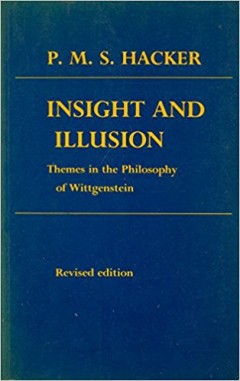
Insight and Illusion: Themes in the Philosophy of Wittgenstein
Since the first publication of Insight and Illusion in l972, a wealth of Wittgenstein's writings have become accessible. Accordingly, in this edition Professor Hacker has rewritten six of his eleven original chapters and revised the others to incorporate the new abundant material. Insight and Illusion now fully clarifies the historical backgrounds of Wittgenstein's highly different masterpieces…
- Edisi
- Revised Edition
- ISBN/ISSN
- 0198247982
- Deskripsi Fisik
- xx + 341 pg.; 21,5 cm.
- Judul Seri
- -
- No. Panggil
- 192 HAC i
Recollections of Wittgenstein
- Edisi
- -
- ISBN/ISSN
- 0192876287
- Deskripsi Fisik
- xix + 236 pg.; 20 cm.
- Judul Seri
- -
- No. Panggil
- 192 REC r
- Edisi
- -
- ISBN/ISSN
- 0192876287
- Deskripsi Fisik
- xix + 236 pg.; 20 cm.
- Judul Seri
- -
- No. Panggil
- 192 REC r

The Blue and Brown Books
These works, as the sub-title makes clear, are unfinished sketches for Philosophical Investigations, possibly the most important and influential philosophical work of modern times. The 'Blue Book' is a set of notes dictated to Witgenstein's Cambridge students in 1933-1934: the 'Brown Book' was a draft for what eventually became the growth of the first part of Philosophical Investigations. This …
- Edisi
- -
- ISBN/ISSN
- -
- Deskripsi Fisik
- xiv + 185 pg.; 21,5 cm.
- Judul Seri
- -
- No. Panggil
- 192 WIT b
Ludwig Wittgenstein: Cambridge Letters. Corespondence with Russell, Keynes, M…
The discovery, in various quarters, of hitherto unknown letters exchanged between Wittgenstein and the chief of his Cambridge friends has stimulated the editors to produce a fundamentally new volume. Their notes too are based on archival material not previously explored. Wittgenstein's correspondents here are not his disciples but those he recognized as his mentors - Bertrand Russell, G.E. Moor…
- Edisi
- -
- ISBN/ISSN
- 0631207589
- Deskripsi Fisik
- vii + 349 pg.; 21,5 cm.
- Judul Seri
- -
- No. Panggil
- 192 LUD l

Ludwig Wittgenstein: A Memoir
Ludwig Wittgenstein remains one of the most powerful influences on contemporary philosophy, yet he shunned publicity and was an extremely private man. His friend Norman Malcolm (himself an eminent philosopher) wrote this remarkably vivid personal memoir of Wittgenstein--first published in 1958 to wide acclaim for its moving and truthful portrait of the gifted yet difficult man. And, although mu…
- Edisi
- -
- ISBN/ISSN
- 0192830422
- Deskripsi Fisik
- viii + 136 pg.; 19,5 cm.
- Judul Seri
- -
- No. Panggil
- 192 MAL l

On Certainty
- Edisi
- First Published
- ISBN/ISSN
- 0-06-131686-5
- Deskripsi Fisik
- vii + 90 pgs.; 20,5 cm.
- Judul Seri
- -
- No. Panggil
- 192 WIT o
- Edisi
- First Published
- ISBN/ISSN
- 0-06-131686-5
- Deskripsi Fisik
- vii + 90 pgs.; 20,5 cm.
- Judul Seri
- -
- No. Panggil
- 192 WIT o
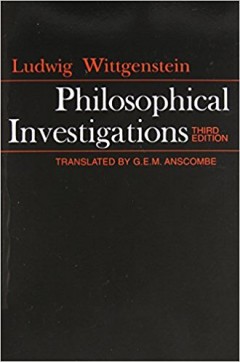
Wittgenstein and The Philosophical Investigation
- Edisi
- -
- ISBN/ISSN
- 0415111900
- Deskripsi Fisik
- xii + 216 pg.; 27,5 cm.
- Judul Seri
- -
- No. Panggil
- 192 McG w
- Edisi
- -
- ISBN/ISSN
- 0415111900
- Deskripsi Fisik
- xii + 216 pg.; 27,5 cm.
- Judul Seri
- -
- No. Panggil
- 192 McG w

Wittgenstein A Life: Young Ludwig (1889-1921)
With a deft command of all the sources, including some only recently made available, Brian McGuinness traces the early career of Wittgenstein from his privileged childhood in Austria to the appearance of the Tractatus Logico-Philosophicus, the only major work Wittgenstein published in his lifetime.
- Edisi
- -
- ISBN/ISSN
- 0715609599
- Deskripsi Fisik
- xii + 322 pg.; 24 cm.
- Judul Seri
- -
- No. Panggil
- 192 McG w.a
 Karya Umum
  Filsafat
  Agama
Agama  Ilmu-ilmu Sosial
  Bahasa
  Ilmu-ilmu Murni
  Ilmu-ilmu Terapan
  Kesenian, Hiburan, dan Olahraga
  Kesusastraan
  Geografi dan Sejarah