Ditapis dengan

The Legacy Of John Rawls
John Rawls was unquestionably the most important moral and political philosopher of the last one hundred years. His A Theory of Justice published in 1971 is already a classic text, and his political philosophy is more widely studied than that of any other theorist. Interest in Rawls's work has increased still further since his recent death and the publication of his complete works, but until no…
- Edisi
- First Published
- ISBN/ISSN
- 0-8264-7843-3
- Deskripsi Fisik
- x + 218 pgs.; 24 cm.
- Judul Seri
- -
- No. Panggil
- 320.01 LEG l

Kegembiraan Yang Tak Dapat Dirampas Orang
- Edisi
- Cetakan ke-1
- ISBN/ISSN
- 9794971391
- Deskripsi Fisik
- 97 hlm.; 21 cm
- Judul Seri
- -
- No. Panggil
- 241.4 BOU k
- Edisi
- Cetakan ke-1
- ISBN/ISSN
- 9794971391
- Deskripsi Fisik
- 97 hlm.; 21 cm
- Judul Seri
- -
- No. Panggil
- 241.4 BOU k
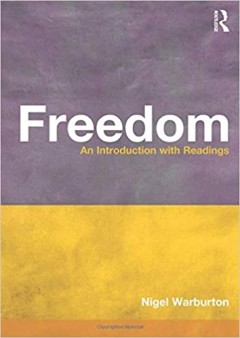
Freedom: An Introduction With Readings
This introduction to the arguments about individual freedom is ideal for newcomers to philosophy or political thought. Each chapter considers a fundamental argument about the scope of individual freedom, including the concepts of negative and positive freedom, freedom of belief, the Harm Principle, and freedom of speech and expression. Each argument is then clearly linked to a reading from key …
- Edisi
- First Published
- ISBN/ISSN
- 0-415-21246-4
- Deskripsi Fisik
- viii + 252 hlm.; 24,5 cm.
- Judul Seri
- -
- No. Panggil
- 323.44 WAR f

A Woman of Egypt
- Edisi
- First Published
- ISBN/ISSN
- 0-340-48916-2
- Deskripsi Fisik
- 538 pgs.; 18 pgs.; 18 cm.
- Judul Seri
- -
- No. Panggil
- 305.420924 SAD w
- Edisi
- First Published
- ISBN/ISSN
- 0-340-48916-2
- Deskripsi Fisik
- 538 pgs.; 18 pgs.; 18 cm.
- Judul Seri
- -
- No. Panggil
- 305.420924 SAD w
The Church, Community of Salvation An Ecumenical Ecclesiology. New Theology S…
Ecclesiology is now taken for granted as an area of theological research. Before the modern age, however, the Church felt no need to define itself. What Father Tavard presents in this work is a systematic organization of the essential Christian beliefs about what the Church has been, is, and ought to be. It focuses on the awareness of being" Church that is inseparable from the profession of the…
- Edisi
- First Published
- ISBN/ISSN
- 0-8146-5789-3
- Deskripsi Fisik
- 264 pgs.; 22,5 cm.
- Judul Seri
- -
- No. Panggil
- 262 TAU c
Social Justice Agenda: Justice, Ecology, Power and the Church
- Edisi
- First Published
- ISBN/ISSN
- 0-7171-1829-0
- Deskripsi Fisik
- 201 pgs.; 21,5 cm.
- Judul Seri
- -
- No. Panggil
- 261.8 DOR s
- Edisi
- First Published
- ISBN/ISSN
- 0-7171-1829-0
- Deskripsi Fisik
- 201 pgs.; 21,5 cm.
- Judul Seri
- -
- No. Panggil
- 261.8 DOR s
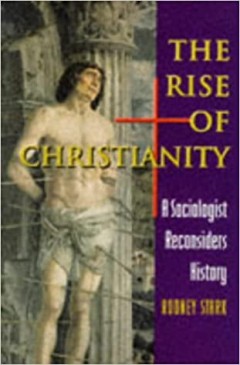
The Rise of Christianity: A Sociologist Reconsiders History
The idea that Christianity started as a clandestine movement among the poor is a widely accepted notion. Yet it is one of many myths that must be discarded if we are to understand just how a tiny messianic movement on the edge of the Roman Empire became the dominant faith of Western civilization. In a fast-paced, highly readable book that addresses beliefs as well as historical facts, Rodney St…
- Edisi
- First Published
- ISBN/ISSN
- 0-691-02749-8
- Deskripsi Fisik
- xiv + 246 pgs.; 24 cm.
- Judul Seri
- -
- No. Panggil
- 306.6701 STA r
The Political: Blackwell Readings in Continental Philosophy
- Edisi
- First Published
- ISBN/ISSN
- 0-631-21547-6
- Deskripsi Fisik
- xi + 303 pgs.; 24,5 cm.
- Judul Seri
- -
- No. Panggil
- 320.1 POL p
- Edisi
- First Published
- ISBN/ISSN
- 0-631-21547-6
- Deskripsi Fisik
- xi + 303 pgs.; 24,5 cm.
- Judul Seri
- -
- No. Panggil
- 320.1 POL p
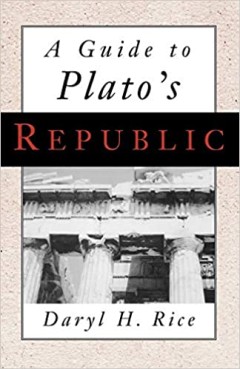
A Guide to Plato's Republic
A Guide to Plato's Republic provides an integral interpretation of the Republic which is accessible even to readers approaching Plato's masterwork for the first time. Written at a level understandable to undergraduates, it is ideal for students and other readers who have little or no background in philosophy or political theory. Rice anticipates their inevitable reactions to the Republic and t…
- Edisi
- First Published
- ISBN/ISSN
- 0-19-511284-9
- Deskripsi Fisik
- xv + 142 pgs.; 21 cm.
- Judul Seri
- -
- No. Panggil
- 321.07 RIC g

Monumen Pancasila Cakti
- Edisi
- -
- ISBN/ISSN
- -
- Deskripsi Fisik
- xxviii + 498 hlm.; 20,7 cm
- Judul Seri
- -
- No. Panggil
- 320.92 SOE m
- Edisi
- -
- ISBN/ISSN
- -
- Deskripsi Fisik
- xxviii + 498 hlm.; 20,7 cm
- Judul Seri
- -
- No. Panggil
- 320.92 SOE m
 Karya Umum
  Filsafat
  Agama
Agama  Ilmu-ilmu Sosial
  Bahasa
  Ilmu-ilmu Murni
  Ilmu-ilmu Terapan
  Kesenian, Hiburan, dan Olahraga
  Kesusastraan
  Geografi dan Sejarah