Ditapis dengan
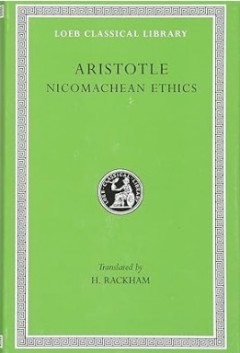
Aristotle: Nicomachean Ethics
Aristotle, great Greek philosopher, researcher, reasoner, and writer, born at Stagirus in 384 BC, was the son of a physician. He studied under Plato at Athens and taught there (367–347); subsequently he spent three years at the court of a former pupil in Asia Minor. After some time at Mitylene, in 343–342 he was appointed by King Philip of Macedon to be tutor of his teen-aged son Alexander.…
- Edisi
- Revised Edition
- ISBN/ISSN
- 0-674-99081-1
- Deskripsi Fisik
- xxxiv + 650 pgs.; 17 cm.
- Judul Seri
- -
- No. Panggil
- 185.1 RAC a

The Genealogy of Morals
Written in response to a book on the origins of morality by his erstwhile friend Paul Rée, the three essays comprising The Genealogy of Morals — all three advancing the critique of Christian morality set forth in Beyond Good and Evil — are among Nietzsche's most sustained and cohesive work. In the first essay — starting from a linguistic analysis of words such as "good," "bad," and "evi…
- Edisi
- First Published
- ISBN/ISSN
- 978-0-486-42691-2
- Deskripsi Fisik
- ix + 118 pgs.; 20,5 cm.
- Judul Seri
- -
- No. Panggil
- 170 NIE g

The Concept of Anxiety : A Simple Psychologically Orienting Deliberation on t…
Describes the nature and forms of anxiety, placing the domain of anxiety within the mental-emotional states of human existence that precede the qualitative leap of faith to the spiritual state of Christianity
- Edisi
- First Published
- ISBN/ISSN
- 0-691-02011-6
- Deskripsi Fisik
- xviii + 273 pgs.; 21,5 cm.
- Judul Seri
- -
- No. Panggil
- 152.4 KIE c
Existence and Existents
First published in 1947, and written mostly during Levinas's imprisonment during World War II, this work provides the first sketch of his mature thoughtlater developed in Totality and Infinity and Otherwise Than Being, or Beyond Essence. This is essential reading for understanding both Levinas's own philosophy and the developments in philosophical thought in the twentieth century.
- Edisi
- First Published
- ISBN/ISSN
- -
- Deskripsi Fisik
- 101 pgs.; 22 cm.
- Judul Seri
- -
- No. Panggil
- 111 LEV e
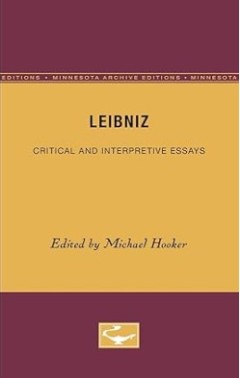
Leibniz : Critical and Interpretive Essays
Leibniz was first published in 1982. Minnesota Archive Editions uses digital technology to make long-unavailable books once again accessible, and are published unaltered from the original University of Minnesota Press editions. The past fifteen years have witnessed a renaissance in the study of the history of philosophy, with special attention devoted to the seventeenth century and the work …
- Edisi
- First Published
- ISBN/ISSN
- 0-7190-0925-1
- Deskripsi Fisik
- vii + 373 pgs.; 23 cm.
- Judul Seri
- -
- No. Panggil
- 193 LEI l
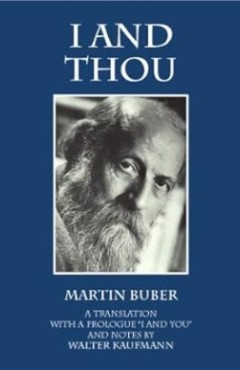
I and Thou
I and Thou, Martin Buber's classic philosophical work, is among the 20th century's foundational documents of religious ethics. "The close association of the relation to God with the relation to one's fellow-men ... is my most essential concern," Buber explains in the Afterword. Before discussing that relationship, in the book's final chapter, Buber explains at length the range and ramifications…
- Edisi
- First Published
- ISBN/ISSN
- 0-567-22060-5
- Deskripsi Fisik
- v + 171 pgs.; 19,5 cm.
- Judul Seri
- -
- No. Panggil
- 193 BUB i
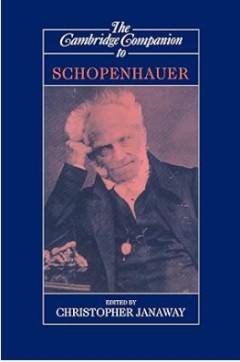
The Cambridge Companion to Arthur Schopenhauer
Schopenhauer (1788-1860) is something of a maverick figure in the history of philosophy. He produced a unique theory of the world and human existence based on his notion of will. This collection analyzes the related but distinct components of will from the point of view of epistemology, metaphysics, philosophy of mind, aesthetics, ethics, and the philosophy of psychoanalysis. New readers will f…
- Edisi
- First Published
- ISBN/ISSN
- -
- Deskripsi Fisik
- 470 pgs.; 27,5 cm.
- Judul Seri
- -
- No. Panggil
- 193 CAM c

The Cambriidge Companion to Simone de Beauvoir
Simone de Beauvoir was a philosopher and writer of notable range and influence whose work is central to feminist theory, French existentialism, and contemporary moral and social philosophy. The essays in this volume examine the major aspects of her thought. They explore her views on the role of biology, sexuality and sexual difference, and evil; the influence on her work of Heidegger, Sartre, M…
- Edisi
- First Published
- ISBN/ISSN
- -
- Deskripsi Fisik
- 319 pgs.; 27 cm.
- Judul Seri
- -
- No. Panggil
- 190 CAM c.b

Kierkegaard as Theologian : The Dialectic of Christian Existence
- Edisi
- First Published
- ISBN/ISSN
- -
- Deskripsi Fisik
- xx + 229 pgs.; 21,5 cm.
- Judul Seri
- -
- No. Panggil
- 198.9 DUP k
- Edisi
- First Published
- ISBN/ISSN
- -
- Deskripsi Fisik
- xx + 229 pgs.; 21,5 cm.
- Judul Seri
- -
- No. Panggil
- 198.9 DUP k
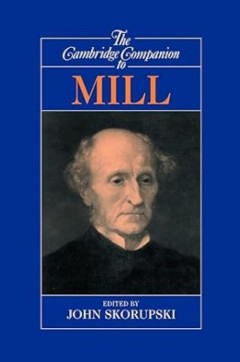
The Cambridge Companion to John Stuart Mill
John Stuart Mill was one of the greatest thinkers of the nineteenth century. His impact on modern culture and thought has been immense, and his continuing importance for contemporary philosophy and social thought is widely recognized. This companion furnishes the reader with a systematic and up-to-date account of the many facets of Mill's thought and influence. New readers will find this the mo…
- Edisi
- First Published
- ISBN/ISSN
- -
- Deskripsi Fisik
- 570 pgs.; 26,5 cm.
- Judul Seri
- -
- No. Panggil
- 192 CAM c
 Karya Umum
  Filsafat
  Agama
Agama  Ilmu-ilmu Sosial
  Bahasa
  Ilmu-ilmu Murni
  Ilmu-ilmu Terapan
  Kesenian, Hiburan, dan Olahraga
  Kesusastraan
  Geografi dan Sejarah