Ditapis dengan

Fifty Years of Insight
Bernard Lonergan is one of the greatest Catholic intellectuals of the twentieth century. His writings cover an enormous range of topics including philosophy, theology, science, history, art, education and economics. His collected works, currently being published by University of Toronto Press, will number over twenty volumes. However, for most people he is best known for two works, Insight: A S…
- Edisi
- First Published
- ISBN/ISSN
- 9781921817304
- Deskripsi Fisik
- xv + 219 pgs.; 23 cm.
- Judul Seri
- -
- No. Panggil
- 230.2092 FIF f
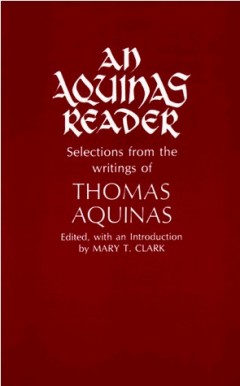
An Aquinas Reader
- Edisi
- First Published
- ISBN/ISSN
- 0-8232-1206-8
- Deskripsi Fisik
- 597 pgs.; 20 cm.
- Judul Seri
- -
- No. Panggil
- 230.209 AQU a
- Edisi
- First Published
- ISBN/ISSN
- 0-8232-1206-8
- Deskripsi Fisik
- 597 pgs.; 20 cm.
- Judul Seri
- -
- No. Panggil
- 230.209 AQU a

Young Reinhold Niebuhr : His Early Writings, 1911-1931
- Edisi
- First Published
- ISBN/ISSN
- -
- Deskripsi Fisik
- 250 pgs.; 22,5 cm.
- Judul Seri
- -
- No. Panggil
- 230.209 YOU y
- Edisi
- First Published
- ISBN/ISSN
- -
- Deskripsi Fisik
- 250 pgs.; 22,5 cm.
- Judul Seri
- -
- No. Panggil
- 230.209 YOU y

A World of Grace : An Introduction to the Themes and Foundations of Karl Rahn…
- Edisi
- First Published
- ISBN/ISSN
- 0-8164-0212-4
- Deskripsi Fisik
- xiii + 198 pgs.; 22,5 cm.
- Judul Seri
- -
- No. Panggil
- 230.20924 WOR w
- Edisi
- First Published
- ISBN/ISSN
- 0-8164-0212-4
- Deskripsi Fisik
- xiii + 198 pgs.; 22,5 cm.
- Judul Seri
- -
- No. Panggil
- 230.20924 WOR w

The Theology Of Change: A Christian Concept Of God In An Eastern Perspective
- Edisi
- First Published
- ISBN/ISSN
- 0-88344-492-5
- Deskripsi Fisik
- ix + 146 pgs.; 21 cm.
- Judul Seri
- -
- No. Panggil
- 230 LEE t
- Edisi
- First Published
- ISBN/ISSN
- 0-88344-492-5
- Deskripsi Fisik
- ix + 146 pgs.; 21 cm.
- Judul Seri
- -
- No. Panggil
- 230 LEE t
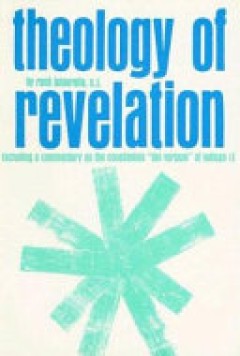
Theology of Revelation : Including a Commentary on the Constitution "Dei Verb…
For fruitful discussion within the Church, for a meaningful dialogue with other Christians, for the renewal of the theology of preaching -- for these and many other reasons, we need a new understanding of the nature of revelation. The usual apologetical treatment of revelation, bent on proving its existence, touches but the fringe of the reality. Our day and age needs a theology of revelation w…
- Edisi
- First Published
- ISBN/ISSN
- -
- Deskripsi Fisik
- 520 pgs.; 21,5 cm.
- Judul Seri
- -
- No. Panggil
- 231.74 LAT t
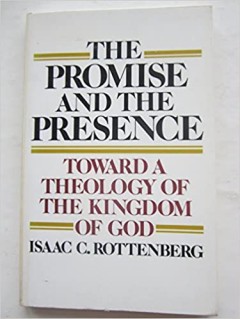
The Promise and the Presence: Toward a Theology of the Kingdom of God
- Edisi
- First Published
- ISBN/ISSN
- 0-8028-1823-4
- Deskripsi Fisik
- viii + 108 pgs.; 21 cm.
- Judul Seri
- -
- No. Panggil
- 231.7 ROT p
- Edisi
- First Published
- ISBN/ISSN
- 0-8028-1823-4
- Deskripsi Fisik
- viii + 108 pgs.; 21 cm.
- Judul Seri
- -
- No. Panggil
- 231.7 ROT p

The Knowledge of the Holy
- Edisi
- First Published
- ISBN/ISSN
- 978-0-06-068412-9
- Deskripsi Fisik
- viii + 120 pgs.; 20 cm.
- Judul Seri
- -
- No. Panggil
- 231.4 TOZ k
- Edisi
- First Published
- ISBN/ISSN
- 978-0-06-068412-9
- Deskripsi Fisik
- viii + 120 pgs.; 20 cm.
- Judul Seri
- -
- No. Panggil
- 231.4 TOZ k

Jesus the Ethics of the Kingdom
- Edisi
- First Published
- ISBN/ISSN
- 0-281-04305-1
- Deskripsi Fisik
- xii + 148 pgs.; 21,5 cm.
- Judul Seri
- -
- No. Panggil
- 231.72 CHI j
- Edisi
- First Published
- ISBN/ISSN
- 0-281-04305-1
- Deskripsi Fisik
- xii + 148 pgs.; 21,5 cm.
- Judul Seri
- -
- No. Panggil
- 231.72 CHI j
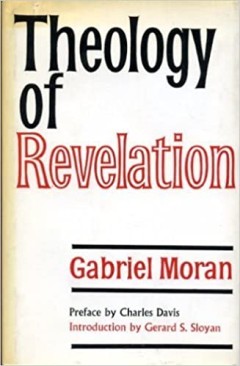
Theology of Revelation
- Edisi
- First Published
- ISBN/ISSN
- 0-855532-232-2
- Deskripsi Fisik
- 221 pgs.; 22 cm.
- Judul Seri
- -
- No. Panggil
- 231.74 MOR t
- Edisi
- First Published
- ISBN/ISSN
- 0-855532-232-2
- Deskripsi Fisik
- 221 pgs.; 22 cm.
- Judul Seri
- -
- No. Panggil
- 231.74 MOR t
 Karya Umum
  Filsafat
  Agama
Agama  Ilmu-ilmu Sosial
  Bahasa
  Ilmu-ilmu Murni
  Ilmu-ilmu Terapan
  Kesenian, Hiburan, dan Olahraga
  Kesusastraan
  Geografi dan Sejarah