Ditapis dengan
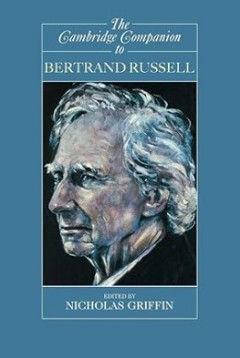
The Cambridge Companion to Bertrand Russell
Bertrand Russell ranks as one of the giants of 20th century philosophy. This Companion focuses on Russell's contributions to modern philosophy and, therefore, concentrates on the early part of his career. Through his books, journalism, correspondence and political activity he exerted a profound influence on modern thought. New readers will find this the most convenient and accessible guide to R…
- Edisi
- First Published
- ISBN/ISSN
- 978-0-521-63178-5
- Deskripsi Fisik
- xvii + 550 pgs.; 28 cm.
- Judul Seri
- -
- No. Panggil
- 193 CAM c.a

The Cambridge Companion to Hannah Arendt
Hannah Arendt was one of the foremost political thinkers of the twentieth century, and her particular interests have made her one of the most frequently cited thinkers of our time. This volume examines the primary themes of her multi-faceted work, from her theory of totalitarianism and her controversial idea of the "banality of evil" to her classic studies of political action and her final refl…
- Edisi
- First Published
- ISBN/ISSN
- -
- Deskripsi Fisik
- 299 pgs.; 25,5 cm.
- Judul Seri
- -
- No. Panggil
- 320.5 CAM c
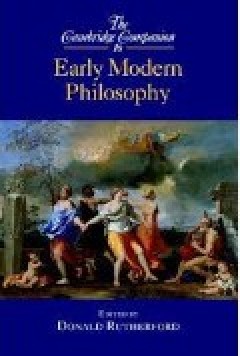
The Cambridge Companion To Early Modern Philosophy
The Cambridge Companion to Early Modern Philosophy is a comprehensive introduction to the central topics and changing shape of philosophical inquiry in the seventeenth and eighteenth centuries. It explores one of the most innovative periods in the history of Western philosophy, extending from Montaigne, Bacon and Descartes through Hume and Kant. During this period, philosophers initiated and re…
- Edisi
- -
- ISBN/ISSN
- 9780121822428
- Deskripsi Fisik
- xv + 400 pg.; 26,5 cm.
- Judul Seri
- -
- No. Panggil
- 190 CAM c
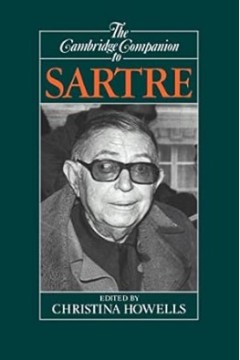
The Cambridge Companion to Sartre
This is one of the most comprehensive and up-to-date surveys of the philosophy of Sartre, by some of the foremost interpreters in the United States and Europe. The essays are both expository and original, and cover Sartre's writings on ontology, phenomenology, psychology, ethics, and aesthetics, as well as his work on history, commitment, and progress; a final section considers Sartre's relatio…
- Edisi
- First Published
- ISBN/ISSN
- -
- Deskripsi Fisik
- 383 pgs.; 27 cm.
- Judul Seri
- -
- No. Panggil
- 194 CAM c.a
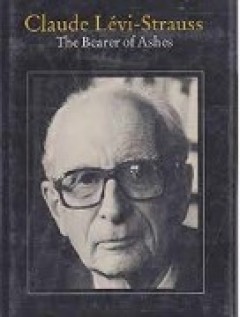
Claude Levi-Strauss : The Bearer of Ashes
- Edisi
- First Published
- ISBN/ISSN
- 0-7100-9297-0
- Deskripsi Fisik
- x + 263 pgs.; 21,5 cm.
- Judul Seri
- -
- No. Panggil
- 306 PAC c
- Edisi
- First Published
- ISBN/ISSN
- 0-7100-9297-0
- Deskripsi Fisik
- x + 263 pgs.; 21,5 cm.
- Judul Seri
- -
- No. Panggil
- 306 PAC c
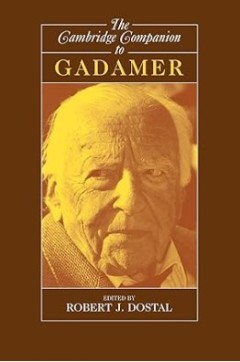
The Cambridge Companion to Gadamer
Hans-Georg Gadamer (b. 1900) is widely recognized as the leading exponent of philosophical hermeneutics. The essays in this collection examine Gadamer's biography, the core of hermeneutical theory, and the significance of his work for ethics, aesthetics, the social sciences, and theology. They consider his appropriation of Hegel, Heidegger, and the Greeks and his relation to modernity, critical…
- Edisi
- First Published
- ISBN/ISSN
- 978-0521000413
- Deskripsi Fisik
- xiii + 317 pgs.; 21 cm.
- Judul Seri
- -
- No. Panggil
- 193 CAM c.c
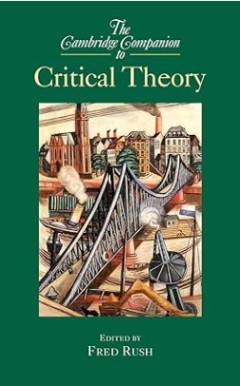
The Cambridge Companion to Critical Theory
Distinguished international contributors examine the major figures in Critical Theory, including Adorno, Benjamin, and Habermas, as well as lesser known but important thinkers. They survey the shared philosophical concerns that have given impetus to Critical Theory throughout its history, and reveal the diversity among its proponents that contributes so much to its richness as a philosophical s…
- Edisi
- First Published
- ISBN/ISSN
- 0-521-81660-2
- Deskripsi Fisik
- xx + 370 pgs.; 25,5 cm.
- Judul Seri
- -
- No. Panggil
- 142 CAM c
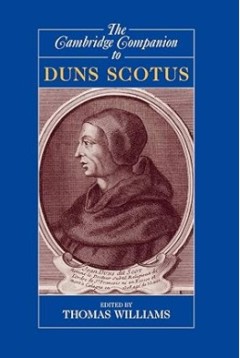
The Cambridge Companion to Duns Scotus
John Duns Scotus (1265/6-1308) was (along with Aquinas and Ockham) one of the three principal figures in medieval philosophy and theology, with an influence on modern thought arguably greater than that of Aquinas. The essays in this volume systematically survey the full range of Scotus's thought. They clearly explain the technical details of his writing and demonstrate the relevance of his work…
- Edisi
- First Published
- ISBN/ISSN
- 978-0-521-63205-8
- Deskripsi Fisik
- xvi + 408 pgs.; 21 cm.
- Judul Seri
- -
- No. Panggil
- 189.4 CAM c
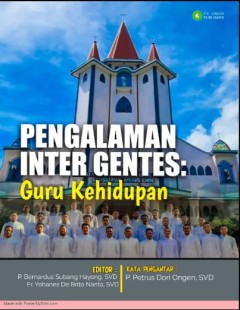
Pengalaman Inter Gentes : Guru Kehidupan
Guru Kehidupan ini berisikan hasil refleksi dua pendamping dan para frater probanis Serikat Sabda Allah (SVD) di Ledalero, periode 2022/2023. Kelompok khusus ini telah mengikrarkan kaul-kaul untuk kekal dalam Serikat Sabda Allah pada tanggal 15 Agustus 2023 dan akan menjadi imam Katolik. Buah refleksi mereka dalam bentuk ulasan, syering pengalaman iman, renungan, kotbah dan puisi bertolak da…
- Edisi
- Cetakan ke-1
- ISBN/ISSN
- -
- Deskripsi Fisik
- vi + 146 hlm.; 20,5 cm.
- Judul Seri
- -
- No. Panggil
- 255 PEN p
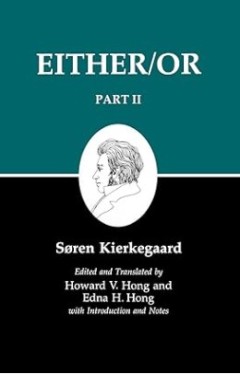
Either/Or Part II
Søren Kierkegaard, the nineteenth-century Danish philosopher rediscovered in the twentieth century, is a major influence in contemporary philosophy, religion, and literature. He regarded Either/Or as the beginning of his authorship, although he had published two earlier works on Hans Christian Andersen and irony. The pseudonymous volumes of Either/Or are the writings of a young man (I) and of …
- Edisi
- First Published
- ISBN/ISSN
- 0-691-02042-6
- Deskripsi Fisik
- 528 pgs.; 21,5 cm.
- Judul Seri
- -
- No. Panggil
- 198.9 KIE e2
 Karya Umum
  Filsafat
  Agama
Agama  Ilmu-ilmu Sosial
  Bahasa
  Ilmu-ilmu Murni
  Ilmu-ilmu Terapan
  Kesenian, Hiburan, dan Olahraga
  Kesusastraan
  Geografi dan Sejarah