Ditapis dengan

Ironic Technics
Even before we humans became modern as homo sapiens we were busy inventing technologies. But our technologies also invent us as humans. And as we reflect upon this process, too often our interpretations have taken utopian or dystopian directions: our technologies will make life infinitely better and lead us into utopian realms, or our technologies will condemn us to alienation or even destroy o…
- Edisi
- First Published
- ISBN/ISSN
- 978-87-92130-18-1
- Deskripsi Fisik
- vii + 57 pgs.; 21,5 cm.
- Judul Seri
- -
- No. Panggil
- 600 IHD i
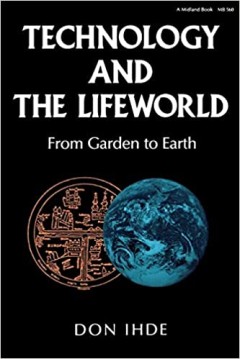
Technology and The Lifeworld: From Garden To Earth
Dr. Ihde brings an enlightening and deeply humanistic perspective to major technological developments, both past and present." ―Science Books & Films "Don Ihde is a pleasure to read. . . . The material is full of nice suggestions and details, empirical materials, fun variations which engage the reader in the work . . . the overall points almost sneak up on you, they are so gently and gradu…
- Edisi
- First Published
- ISBN/ISSN
- 0-25332900-0
- Deskripsi Fisik
- xiv + 226 pgs.; 23 cm.
- Judul Seri
- -
- No. Panggil
- 601 IHD t
A History of Muslim Philosophy Volume 2
- Edisi
- -
- ISBN/ISSN
- -
- Deskripsi Fisik
- viii + 1003 pg.; 24 cm.
- Judul Seri
- -
- No. Panggil
- 297.092 SHA h.2
- Edisi
- -
- ISBN/ISSN
- -
- Deskripsi Fisik
- viii + 1003 pg.; 24 cm.
- Judul Seri
- -
- No. Panggil
- 297.092 SHA h.2
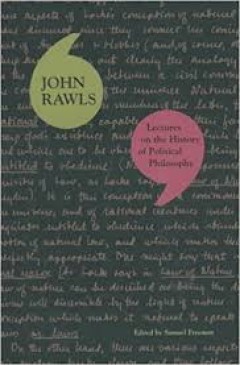
Lectures On The History Of Political Philosophy
Constantly revised and refined over three decades, Rawls's lectures on various historical figures reflect his developing and changing views on the history of liberalism and democracy. With its careful analyses of the doctrine of the social contract, utilitarianism, and socialism, this volume has a critical place in the traditions it expounds.
- Edisi
- First Published
- ISBN/ISSN
- 978-0-674-02492-2
- Deskripsi Fisik
- xix + 476 pgs.; 23 cm.
- Judul Seri
- -
- No. Panggil
- 320.01 RAW l
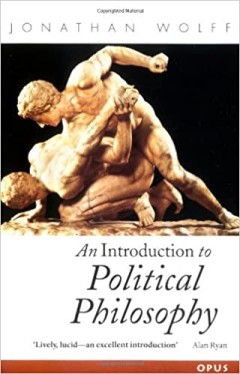
An Introduction To Political Philosophy
What would life be like without the state? What justifies the state? Who should rule? How much liberty should the citizen enjoy? How should property be justly distributed? This book examines the central problems involved in political philosophy and the past attempts to respond to these problems. Jonathan Wolff looks at the works of Plato, Hobbes, Locke, Rousseau, Mill, Marx, and Rawls (among ot…
- Edisi
- First Published
- ISBN/ISSN
- 0-19-289251-7
- Deskripsi Fisik
- x + 237 pgs.; 19,5 cm.
- Judul Seri
- -
- No. Panggil
- 320.01 WOL a

Habermas and Modernity
All of these essays focus on the concept of modernity in the philosophical work of Jurgen Habermas - an ambitious and carefully argued intellectual project that invites, indeed demands, rigorous scrutiny. Following an introductory overview of Habermas's work by Richard Bernstein, Albrecht Wellmer's essay places the philosopher within the tradition of Hegel, Marx, Weber, and Critical Theory. Mar…
- Edisi
- First Published
- ISBN/ISSN
- 0-7456-0066-2
- Deskripsi Fisik
- ix + 243 pgs.; 21,5 cm.
- Judul Seri
- -
- No. Panggil
- 335.411 HAB h

Debates in Contemporary Political Philosophy an Anthology
This textbook reflects the buoyant state of contemporary political philosophy, and the development of the subject in the past two decades. It includes seminal papers on fundamental philosophical issues such as: the nature of social explanation distributive justice liberalism and communitarianism citizenship and multiculturalism nationalism democracy criminal justice. A range of views is…
- Edisi
- First Published
- ISBN/ISSN
- 0-415-30210-2
- Deskripsi Fisik
- x + 454 pgs.; 24,5 cm
- Judul Seri
- -
- No. Panggil
- 320.01 DEB d

Essays In Existentialism
In Essays in Existentialism, Jean-Paul Sartre (1905-1980), the leading French exponent of existential philosophy, wrote a book that open many doors to the mind. Sartre challenged his readers to think beyond the meaning of their everyday thoughts and beliefs. His essays on nothingness, on the emotions, and on the image—including “The Problem of Nothingness,” “The Role of the Image in Men…
- Edisi
- First Published
- ISBN/ISSN
- 0-8065-0162-6
- Deskripsi Fisik
- x + 437 pgs.; 20,5 cm.
- Judul Seri
- -
- No. Panggil
- 194 SAR e.a
All Gall Is Divided
- Edisi
- First Published
- ISBN/ISSN
- 1-55970-471-3
- Deskripsi Fisik
- ix + 151 pgs.; 20,5 cm.
- Judul Seri
- -
- No. Panggil
- 194 CIO a
- Edisi
- First Published
- ISBN/ISSN
- 1-55970-471-3
- Deskripsi Fisik
- ix + 151 pgs.; 20,5 cm.
- Judul Seri
- -
- No. Panggil
- 194 CIO a
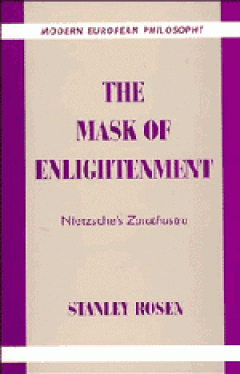
The Mask of Enlightenment: Nietzsche's Zarathustra
The Mask of Enlightenment is the most detailed textual and thematic study of Nietzsche's most important but least understood works: Thus Spake Zarathustra. In this book Nietzsche was laying the groundwork for a fundamental philosophical and political revolution on a global scale. One of the difficulties that the text poses is Nietzsche's prophetic style; Stanley Rosen unweaves the complex threa…
- Edisi
- First Published
- ISBN/ISSN
- 0-521-49546-6
- Deskripsi Fisik
- xviii + 264 hlm.; 23 cm.
- Judul Seri
- -
- No. Panggil
- 193 ROS m
 Karya Umum
  Filsafat
  Agama
Agama  Ilmu-ilmu Sosial
  Bahasa
  Ilmu-ilmu Murni
  Ilmu-ilmu Terapan
  Kesenian, Hiburan, dan Olahraga
  Kesusastraan
  Geografi dan Sejarah